
Summary / Verdict
LinkedIn is the most effective channel for cybersecurity companies to reach CISOs, IT directors, and security managers who control security budgets.
Success requires building credibility through content before direct outreach, as security professionals are naturally skeptical of unsolicited pitches.
Reviewed against our editorial methodology for search intent, workflow clarity, fit guidance, and internal linking.
Use this page as an operating playbook, not just a reference document.
Tighter process usually beats more volume.
Weekly review is part of execution, not an optional extra.
Who this is for
This guide is best for B2B teams in IT Services, Consulting Firms, Cybersecurity Companies that need a clearer operating model around linkedin lead generation for cybersecurity companies.
It is especially useful when the buyer, segment, and offer are at least directionally known, but execution is still uneven. This is not the right starting point if your offer is unclear or if you do not yet know which buyer profile closes best.
Key features
Workflow Focus
Keep the operating loop practical
Playbook pages work best when they spotlight the workflow elements that make execution more stable from week to week.
These are the practical workflow elements that usually matter most in execution.
- Optimize your LinkedIn profile as a cybersecurity authority page with relevant certifications and expertise.
- Build a targeted list of CISOs, IT Directors, and Security Managers at companies with 50-500 employees.
- Send personalized connection requests referencing their industry, recent security news, or compliance requirements.
- Share valuable cybersecurity insights and threat analysis to build credibility before outreach.
- Use LinkedIn messages to offer free security assessments or compliance gap analysis.
Pros & Cons
Pros
- Direct access to security decision-makers who control budgets.
- Content marketing builds trust and authority before outreach.
- LinkedIn groups and communities provide warm introduction opportunities.
- Visual content (case studies, threat analysis) performs well on the platform.
Cons
- Slower than email—relationship building takes 2-4 weeks before conversion.
- LinkedIn limits daily connection requests to 100 per account.
- Security professionals are inundated with sales pitches—differentiation is critical.
- Requires consistent content creation to maintain visibility.
Pricing snapshot
Efficiency Lens
Protect simple workflows from hidden cost
Even on practical playbooks, pricing should be viewed through wasted activity, bad segmentation, and duplicated work.
Even in playbooks, pricing should be judged in the context of workflow efficiency and signal quality.
The real cost of linkedin lead generation for cybersecurity companies is not just software — it is also the operating cost of bad targeting, weak messaging, and slow follow-up. List quality and campaign structure usually matter before expanding the stack.
For teams evaluating tools, start with the free tier or trial period. Validate that the workflow fits your process before committing to an annual plan.
Always validate current pricing and plan limits directly on vendor sites before making a purchase decision.
Problem
Teams often try to solve linkedin lead generation for cybersecurity companies with more activity instead of better targeting, cleaner process design, and clearer next-step ownership.
Solution Framework
The practical framework here is straightforward: define the right segment, build a workflow that matches the buyer reality, then inspect the outcome weekly. If you need broader context first, start with the Find Clients hub and use this page as the applied execution layer.
Another thing that matters: the best teams make one strong process decision at a time. They do not change targeting, copy, cadence, and qualification all at once. They isolate one constraint, fix it, then review the result.
Playbook Lens
How to make this workflow usable in the real week
A playbook page should help the team execute with less confusion. That means clearer ownership, fewer moving parts, and a tighter weekly review loop.
Best use
Treat this page as an operating reference for one workflow, not as a theory document.
Process rule
The workflow should be narrow enough that one person can explain what changed from last week.
What wins
Simple repeatable steps usually beat more channels, more tools, or more volume.
Internal navigation
- Primary hub: Find Clients
- Industry context: IT Services, Consulting Firms, Cybersecurity Companies
- Methodology: How we review guides
Actionable Steps
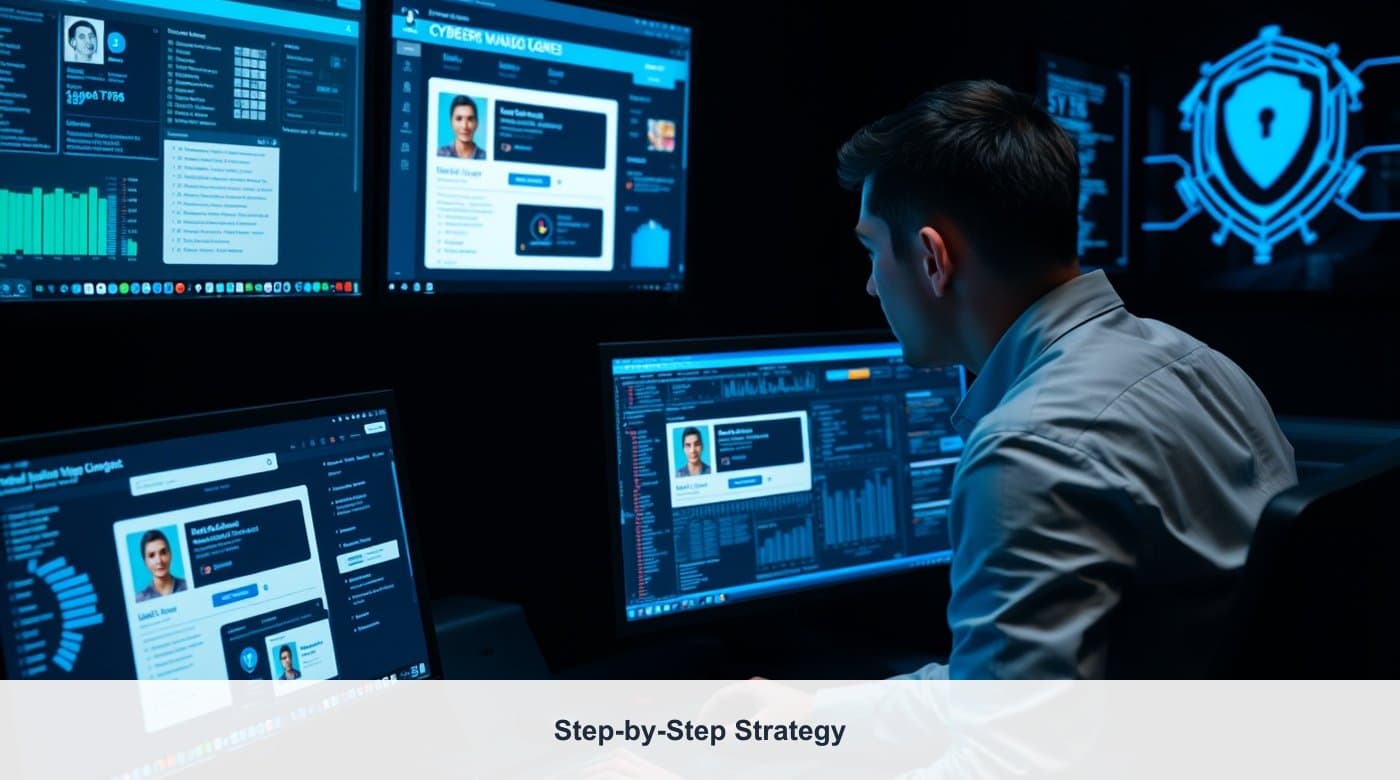
- Optimize your LinkedIn profile as a cybersecurity authority page with relevant certifications and expertise.
- Build a targeted list of CISOs, IT Directors, and Security Managers at companies with 50-500 employees.
- Send personalized connection requests referencing their industry, recent security news, or compliance requirements.
- Share valuable cybersecurity insights and threat analysis to build credibility before outreach.
- Use LinkedIn messages to offer free security assessments or compliance gap analysis.
- Move conversations to email or phone for detailed discussions and proposals.
Tip Box
Reference recent data breaches or compliance deadlines for urgency.
Real Business Use Cases
- MSSPs targeting mid-market companies
- Penetration testing firms finding new clients
- Compliance consultants reaching regulated industries
- Security awareness training companies prospecting HR leaders
A realistic use of this workflow is not “blast more emails” or “build a bigger list.” It is usually one of these: finding a tighter ICP, making messages more relevant, reducing follow-up confusion, or improving how early opportunities are qualified.
Comparison table
Operating Tradeoffs
Pick the workflow with the least friction
The best playbook comparison shows which operating model keeps execution simplest while still producing enough signal.
This comparison helps frame tradeoffs between doing it manually, using Apollo, or using a heavier stack.
| Tool / Approach | Best for | Price level | Verdict |
|---|---|---|---|
| Apollo account-first prospecting | Teams that need fast list building with filtering | Low to mid | Best balance of speed and targeting control |
| Manual research | Niche campaigns and high-ticket accounts | Low cash, high time cost | Good depth, low scale |
| Broad database export | Teams optimizing only for volume | Varies | Usually weak on fit and message relevance |
What good looks like
Instead of relying on generic vanity metrics, judge this workflow against practical quality signals. If these are improving, the system is usually moving in the right direction.
High-fit account list
This should become easier to observe week by week if the process is improving.
Clear role relevance
This should become easier to observe week by week if the process is improving.
Clean list segmentation
This should become easier to observe week by week if the process is improving.
Recommended Tool
Recommended Tool: Apollo.io - Try Free
Use Apollo to find decision-makers, enrich lead data, and launch outbound sequences from one place.
Try Apollo FreeExecution Tips
- Reference recent data breaches or compliance deadlines for urgency.
- Join and participate in cybersecurity LinkedIn groups before direct outreach.
- Share case studies and threat intelligence to demonstrate expertise.
- Connect with multiple stakeholders in target accounts for broader reach.
Hidden drawbacks
- List building looks productive even when the underlying ICP is weak. That creates activity without qualified pipeline.
- Most teams underestimate the setup time for linkedin lead generation for cybersecurity companies. The first iteration usually takes 2-3x longer than expected.
- A process can look busy and still produce weak sales outcomes if qualification criteria are vague.
- Template-based approaches work best when adapted to your specific buyer profile, not copied verbatim.
When NOT to use this approach
This is not the right starting point if your offer is unclear or if you do not yet know which buyer profile closes best.
Also pause if no one owns reply handling, list QA, or handoff into pipeline. Outbound gets expensive when execution is fragmented.
Skip this approach if you have not yet validated product-market fit or if your target customer profile is still changing frequently.
Real scenario walkthrough
A cybersecurity consultancy shares weekly threat analysis posts targeting healthcare CISOs.
After 3 weeks of consistent posting, they send 50 personalized connection requests to CISOs at hospitals with 200+ beds.
They book 6 security assessment consultations and close 2 engagements worth $75,000 each.
If you need adjacent playbooks, compare this guide with Find Clients, Outreach, Sales Pipeline, and For Startups.
Operating Notes
What keeps this playbook durable over time
LinkedIn Lead Generation for Cybersecurity Companies should support a cleaner find clients workflow, not just create more activity.
Implementation checklist
Execution Checklist
Make the workflow repeatable
The final checklist should support consistent weekly execution, not just one good launch.
Use this checklist to make the workflow easier to run consistently each week.
- Define one segment, one buyer problem, and one clear offer angle for linkedin lead generation for cybersecurity companies.
- Review account fit before expanding contact volume.
- Map roles and next-step ownership before launch.
- Write one clear CTA linked to a specific business problem.
- Set up tracking for opens, replies, and meetings booked.
- Review reply quality, meeting quality, and qualification notes weekly.
- Document one process change at a time.
- Use internal links to connect this find clients workflow to the next operational problem.
Alternatives and strategy options
If this exact workflow is not the right fit, move one level up to the broader Find Clients hub or compare it against adjacent guides in the same cluster.
For teams in it services, consider starting with an industry-specific playbook before applying this general framework.
In larger deal environments, more account-based motion may be a better choice. In earlier-stage teams, a simpler founder-led version may perform better.
Related Guides
- Apollo Cold Email Sequence Template That Gets Replies
- Personalization at Scale With Apollo Workflows
- Finding Decision Makers with Apollo
- How to Find B2B Leads Fast Without Wasting Credits
- Account-Based Prospecting Framework for Small B2B Teams
FAQ
How many LinkedIn connection requests should cybersecurity companies send per week?
Send 50-100 personalized connection requests per week. Focus on quality connections with decision-makers rather than volume.
What LinkedIn content works best for cybersecurity lead generation?
Share threat analysis, compliance updates, case studies, and security best practices. Educational content builds trust and authority.
How long does LinkedIn lead generation take for cybersecurity firms?
Expect 2-4 weeks to see initial responses. Build a 90-day content and outreach strategy for consistent pipeline generation.
Final verdict
LinkedIn lead generation works best for cybersecurity companies when combined with educational content marketing.
Build authority first through threat intelligence and compliance insights, then convert connections into consultations.
Share this guide