
Summary / Verdict
Inbound lead generation for B2B SaaS requires a content-first approach targeting bottom-of-funnel keywords with commercial intent.
Success depends on creating comparison pages, alternative pages, and case studies that directly address purchase decisions.
Reviewed against our editorial methodology for search intent, workflow clarity, fit guidance, and internal linking.
A strategy page should improve decision quality, not just activity.
Segment clarity matters more than channel volume.
The best strategic change is usually the one the team can sustain weekly.
Who this is for
This guide is best for B2B teams in SaaS Companies, Marketing Agencies that need a clearer operating model around inbound lead generation for b2b saas: complete strategy guide.
It is especially useful when the buyer, segment, and offer are at least directionally known, but execution is still uneven. This is not the right starting point if your offer is unclear or if you do not yet know which buyer profile closes best.
Strategic levers
Strategic Lever
Focus on the few changes that move outcomes
Strategy pages should emphasize the workflow levers that change decision quality, segmentation clarity, and downstream pipeline quality the most.
These are the strategic levers that most change quality, focus, and operating speed.
- Map your buyer journey and identify content needs at each stage: awareness, consideration, decision.
- Create high-value content targeting bottom-of-funnel keywords with commercial intent.
- Build landing pages optimized for conversion with clear CTAs and social proof.
- Implement lead scoring and qualification workflows to prioritize sales-ready leads.
- Use gated content like templates, calculators, and case studies to capture leads.
Pros & Cons
Pros
- Compounds over time—content generates leads for years.
- Higher quality leads than outbound (self-selected interest).
- Lower customer acquisition cost at scale.
- Builds brand authority and market positioning.
Cons
- Slow to start—3-6 months for initial results, 12-24 months for significant pipeline.
- Requires consistent content creation and SEO expertise.
- Highly competitive for popular keywords.
- Difficult to predict month-to-month results.
Resource tradeoffs
Resource Tradeoff
Match strategy to team capacity
Pricing and resourcing matter in strategy content because the best plan is often the one the team can sustain consistently, not the most ambitious one.
Resource tradeoffs matter here because strategy is constrained by time, budget, and team capacity.
The real cost of inbound lead generation for b2b saas: complete strategy guide is not just software — it is also the operating cost of bad targeting, weak messaging, and slow follow-up. List quality and campaign structure usually matter before expanding the stack.
For teams evaluating tools, start with the free tier or trial period. Validate that the workflow fits your process before committing to an annual plan.
Always validate current pricing and plan limits directly on vendor sites before making a purchase decision.
Problem
Teams often try to solve inbound lead generation for b2b saas: complete strategy guide with more activity instead of better targeting, cleaner process design, and clearer next-step ownership.
Solution Framework
The practical framework here is straightforward: define the right segment, build a workflow that matches the buyer reality, then inspect the outcome weekly. If you need broader context first, start with the Find Clients hub and use this page as the applied execution layer.
Another thing that matters: the best teams make one strong process decision at a time. They do not change targeting, copy, cadence, and qualification all at once. They isolate one constraint, fix it, then review the result.
Strategy Lens
What changes decision quality in this motion
Strategy content should narrow choices. The practical question is which operating lever improves outcomes most: targeting, messaging, process ownership, or review cadence.
Primary lever
Most teams should fix account selection and role relevance before increasing outbound activity.
Constraint to watch
If no one owns qualification and reply handling, strong top-of-funnel work still stalls downstream.
Best outcome
A strategy is working when decisions get simpler and weekly execution gets more consistent.
Internal navigation
- Primary hub: Find Clients
- Industry context: SaaS Companies, Marketing Agencies
- Methodology: How we review guides
Actionable Steps
- Map your buyer journey and identify content needs at each stage: awareness, consideration, decision.
- Create high-value content targeting bottom-of-funnel keywords with commercial intent.
- Build landing pages optimized for conversion with clear CTAs and social proof.
- Implement lead scoring and qualification workflows to prioritize sales-ready leads.
- Use gated content like templates, calculators, and case studies to capture leads.
- Nurture leads with email sequences that educate and build trust over time.
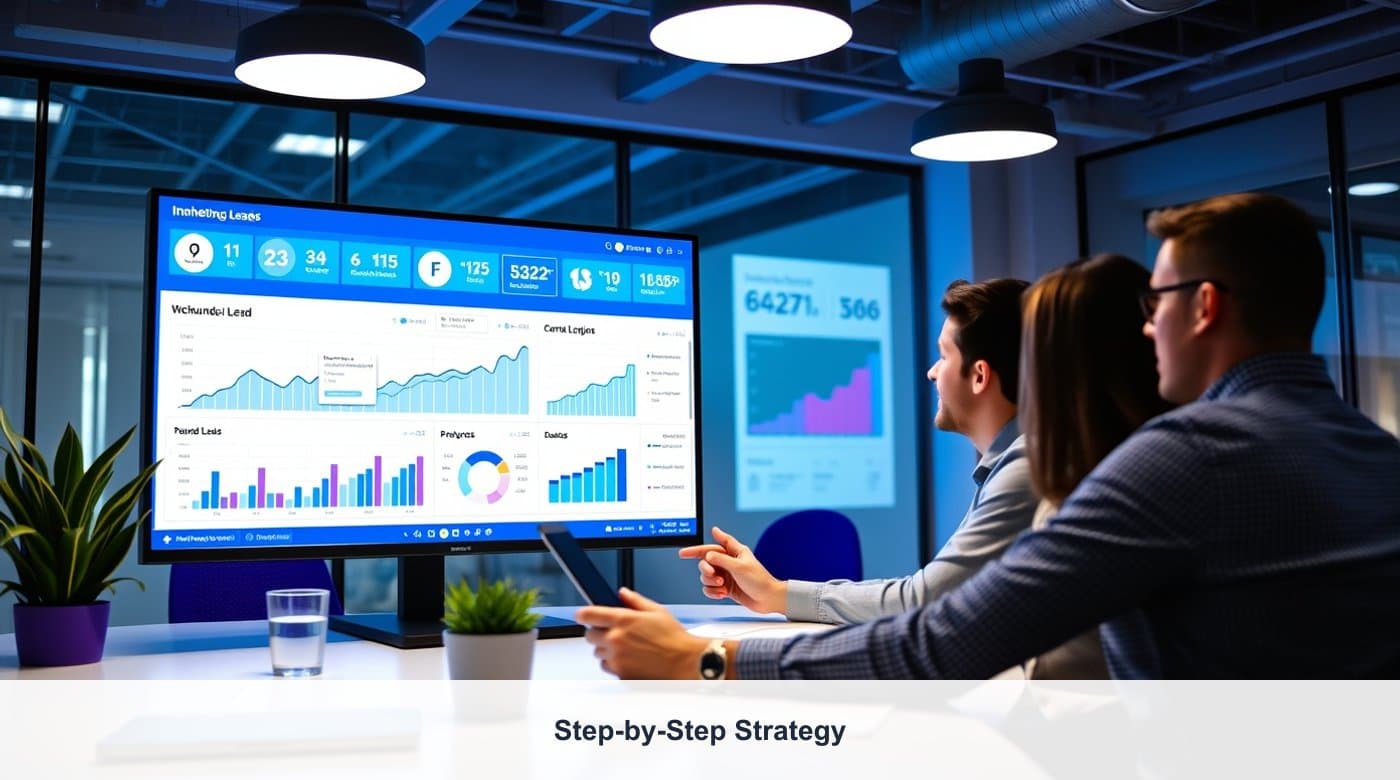
Tip Box
Start with bottom-of-funnel content that directly addresses purchase decisions.
Real Business Use Cases
- B2B SaaS startups building first inbound channel
- Enterprise SaaS scaling content marketing
- SaaS platforms competing in crowded markets
- Vertical SaaS targeting specific industries
A realistic use of this workflow is not “blast more emails” or “build a bigger list.” It is usually one of these: finding a tighter ICP, making messages more relevant, reducing follow-up confusion, or improving how early opportunities are qualified.
Approach comparison
Strategic Options
Compare operating models, not tactics in isolation
A good strategic comparison helps decide whether to go narrower, go multi-channel, stay founder-led, or systemize with a larger outbound workflow.
This comparison is meant to clarify which strategic approach fits the current stage best.
| Tool / Approach | Best for | Price level | Verdict |
|---|---|---|---|
| Apollo account-first prospecting | Teams that need fast list building with filtering | Low to mid | Best balance of speed and targeting control |
| Manual research | Niche campaigns and high-ticket accounts | Low cash, high time cost | Good depth, low scale |
| Broad database export | Teams optimizing only for volume | Varies | Usually weak on fit and message relevance |
What good looks like
Instead of relying on generic vanity metrics, judge this workflow against practical quality signals. If these are improving, the system is usually moving in the right direction.
High-fit account list
This should become easier to observe week by week if the process is improving.
Clear role relevance
This should become easier to observe week by week if the process is improving.
Clean list segmentation
This should become easier to observe week by week if the process is improving.
Recommended Tool
Recommended Tool: Apollo.io - Try Free
Use Apollo to find decision-makers, enrich lead data, and launch outbound sequences from one place.
Try Apollo FreeExecution Tips
- Start with bottom-of-funnel content that directly addresses purchase decisions.
- Focus on long-tail keywords with clear commercial intent and low competition.
- Build comparison pages, alternative pages, and pricing content.
- Use customer stories and case studies to demonstrate real value.
Hidden drawbacks
- List building looks productive even when the underlying ICP is weak. That creates activity without qualified pipeline.
- Most teams underestimate the setup time for inbound lead generation for b2b saas: complete strategy guide. The first iteration usually takes 2-3x longer than expected.
- A process can look busy and still produce weak sales outcomes if qualification criteria are vague.
- Template-based approaches work best when adapted to your specific buyer profile, not copied verbatim.
When NOT to use this approach
This is not the right starting point if your offer is unclear or if you do not yet know which buyer profile closes best.
Also pause if no one owns reply handling, list QA, or handoff into pipeline. Outbound gets expensive when execution is fragmented.
Skip this approach if you have not yet validated product-market fit or if your target customer profile is still changing frequently.
Real scenario walkthrough
A B2B SaaS startup creates 20 comparison pages targeting "X vs Y" keywords.
They also publish 10 case studies and 5 implementation guides.
Within 9 months, inbound leads account for 60% of qualified pipeline with 3x higher close rates than outbound.
If you need adjacent playbooks, compare this guide with Find Clients, Outreach, Sales Pipeline, and For Startups.
Execution Logic
How to turn strategy into weekly operating rhythm
Inbound Lead Generation for B2B SaaS: Complete Strategy Guide should support a cleaner find clients workflow, not just create more activity.
Execution checklist
Execution Discipline
Turn the strategy into weekly behavior
A strategic checklist is useful when it forces ownership, review cadence, and a smaller number of inspectable changes.
Use this checklist to make sure strategy turns into an executable operating plan.
- Define one segment, one buyer problem, and one clear offer angle for inbound lead generation for b2b saas: complete strategy guide.
- Review account fit before expanding contact volume.
- Map roles and next-step ownership before launch.
- Write one clear CTA linked to a specific business problem.
- Set up tracking for opens, replies, and meetings booked.
- Review reply quality, meeting quality, and qualification notes weekly.
- Document one process change at a time.
- Use internal links to connect this find clients workflow to the next operational problem.
Alternatives and strategy options
If this exact workflow is not the right fit, move one level up to the broader Find Clients hub or compare it against adjacent guides in the same cluster.
For teams in saas companies, consider starting with an industry-specific playbook before applying this general framework.
In larger deal environments, more account-based motion may be a better choice. In earlier-stage teams, a simpler founder-led version may perform better.
Related Guides
- B2B Marketing Without Ads
- How to Generate Qualified B2B Leads
- Best Lead Generation Tools for Small Business
- How to Find B2B Leads Fast Without Wasting Credits
- Account-Based Prospecting Framework for Small B2B Teams
FAQ
How long does inbound lead generation take for B2B SaaS?
Initial results: 3-6 months. Significant pipeline: 6-12 months. Compounding growth: 12-24 months. Inbound is a long-term investment.
What content works best for B2B SaaS inbound leads?
Comparison pages, alternative pages, case studies, templates, and bottom-of-funnel guides. Content that directly addresses purchase decisions converts best.
How do I measure inbound lead generation ROI?
Track cost per lead, lead-to-customer conversion rate, customer acquisition cost, and lifetime value. Compare against outbound costs and conversion rates.
Final verdict
Inbound lead generation is the highest-ROI channel for B2B SaaS at scale, but requires patience and consistent execution.
Start with bottom-of-funnel content that directly addresses purchase decisions.
Share this guide