Summary / Verdict
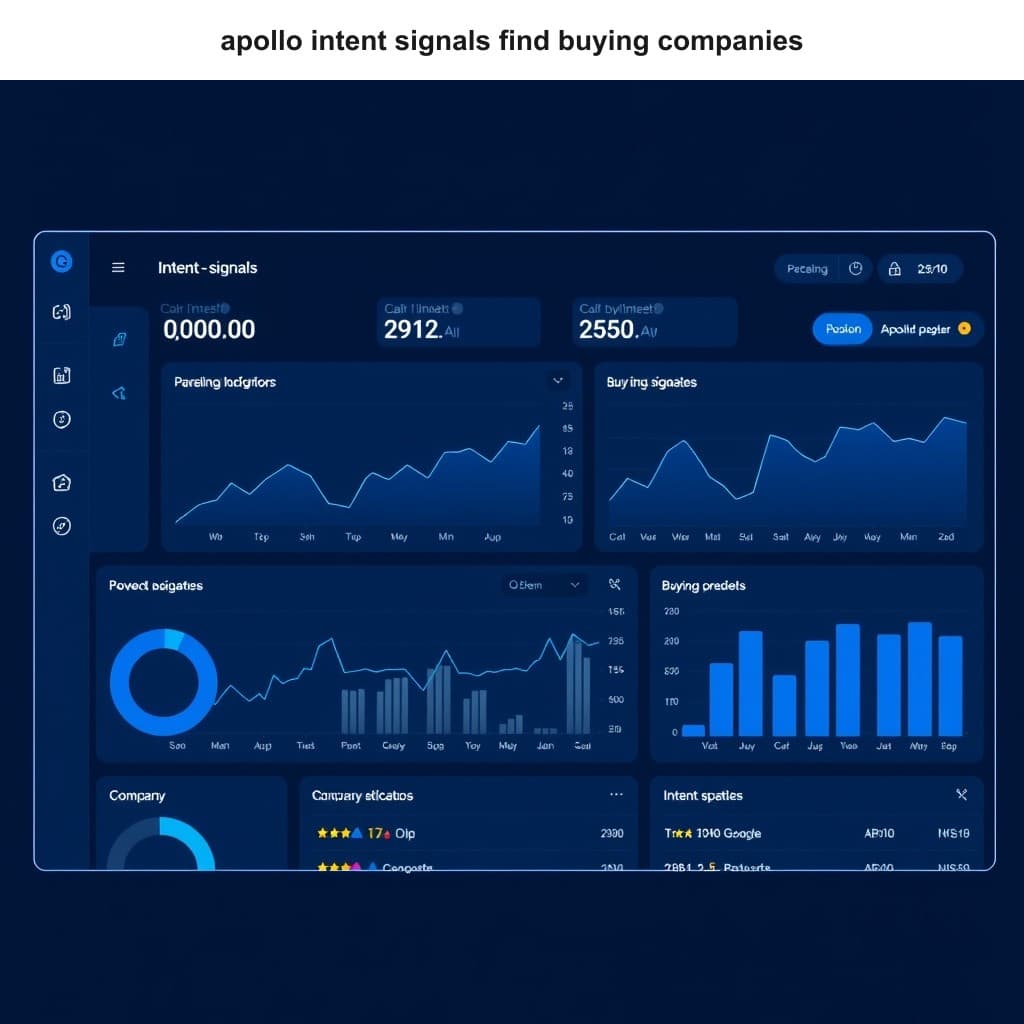
Apollo intent signals reveal which companies are actively researching your product category right now. Set up intent tracking, interpret signal strength, and build sequences that convert warm prospects.
Reviewed against our editorial methodology for search intent, workflow clarity, fit guidance, and internal linking.
Use this page as an operating playbook, not just a reference document.
Tighter process usually beats more volume.
Weekly review is part of execution, not an optional extra.
Who this is for
This guide is best for B2B teams in SaaS Companies, IT Services, Marketing Agencies that need a clearer operating model around using apollo intent signals to find companies ready to buy.
It is especially useful when the buyer, segment, and offer are at least directionally known, but execution is still uneven. This is not the right starting point if your offer is unclear or if you do not yet know which buyer profile closes best.
Key features
Workflow Focus
Keep the operating loop practical
Playbook pages work best when they spotlight the workflow elements that make execution more stable from week to week.
These are the practical workflow elements that usually matter most in execution.
- Define a tighter target before scaling execution.
- Use practical filtering and segmentation logic.
- Map the right stakeholders before launching outreach.
- Review campaign quality with operational discipline.
- Tie activity back to pipeline quality, not vanity metrics.
Pros & Cons
Pros
- Targets companies actively researching your category — they're already interested
- Real-time data lets you reach prospects at the exact moment of need
- Higher conversion rates than traditional cold outreach (5x for intent-flagged companies)
- Automated tracking requires minimal manual research once set up
Cons
- Intent data can be noisy — some signals are false positives from casual browsing
- Requires ongoing optimization of intent topics to maintain signal quality
- Competitors see the same intent signals — speed of outreach matters
- Signal accuracy varies by industry and product category
Pricing snapshot
Efficiency Lens
Protect simple workflows from hidden cost
Even on practical playbooks, pricing should be viewed through wasted activity, bad segmentation, and duplicated work.
Even in playbooks, pricing should be judged in the context of workflow efficiency and signal quality.
The real cost of using apollo intent signals to find companies ready to buy is not just software — it is also the operating cost of bad targeting, weak messaging, and slow follow-up. List quality and campaign structure usually matter before expanding the stack.
For teams evaluating tools, start with the free tier or trial period. Validate that the workflow fits your process before committing to an annual plan.
Always validate current pricing and plan limits directly on vendor sites before making a purchase decision.
Problem
Teams often try to solve using apollo intent signals to find companies ready to buy with more activity instead of better targeting, cleaner process design, and clearer next-step ownership.
Solution Framework
The practical framework here is straightforward: define the right segment, build a workflow that matches the buyer reality, then inspect the outcome weekly. If you need broader context first, start with the Find Clients hub and use this page as the applied execution layer.
Another thing that matters: the best teams make one strong process decision at a time. They do not change targeting, copy, cadence, and qualification all at once. They isolate one constraint, fix it, then review the result.
Playbook Lens
How to make this workflow usable in the real week
A playbook page should help the team execute with less confusion. That means clearer ownership, fewer moving parts, and a tighter weekly review loop.
Best use
Treat this page as an operating reference for one workflow, not as a theory document.
Process rule
The workflow should be narrow enough that one person can explain what changed from last week.
What wins
Simple repeatable steps usually beat more channels, more tools, or more volume.
Internal navigation
- Primary hub: Find Clients
- Industry context: SaaS Companies, IT Services, Marketing Agencies
- Methodology: How we review guides
Actionable Steps
Tip Box
Keep the workflow narrow enough to review every week.
Real Business Use Cases
A realistic use of this workflow is not “blast more emails” or “build a bigger list.” It is usually one of these: finding a tighter ICP, making messages more relevant, reducing follow-up confusion, or improving how early opportunities are qualified.
Comparison table
Operating Tradeoffs
Pick the workflow with the least friction
The best playbook comparison shows which operating model keeps execution simplest while still producing enough signal.
This comparison helps frame tradeoffs between doing it manually, using Apollo, or using a heavier stack.
| Tool / Approach | Best for | Price level | Verdict |
|---|---|---|---|
| Apollo account-first prospecting | Teams that need fast list building with filtering | Low to mid | Best balance of speed and targeting control |
| Manual research | Niche campaigns and high-ticket accounts | Low cash, high time cost | Good depth, low scale |
| Broad database export | Teams optimizing only for volume | Varies | Usually weak on fit and message relevance |
What good looks like
Instead of relying on generic vanity metrics, judge this workflow against practical quality signals. If these are improving, the system is usually moving in the right direction.
High-fit account list
This should become easier to observe week by week if the process is improving.
Clear role relevance
This should become easier to observe week by week if the process is improving.
Clean list segmentation
This should become easier to observe week by week if the process is improving.
Recommended Tool
Recommended Tool: Apollo.io - Try Free
Use Apollo to find decision-makers, enrich lead data, and launch outbound sequences from one place.
Try Apollo FreeExecution Tips
Hidden drawbacks
- List building looks productive even when the underlying ICP is weak. That creates activity without qualified pipeline.
- Most teams underestimate the setup time for using apollo intent signals to find companies ready to buy. The first iteration usually takes 2-3x longer than expected.
- A process can look busy and still produce weak sales outcomes if qualification criteria are vague.
- Template-based approaches work best when adapted to your specific buyer profile, not copied verbatim.
When NOT to use this approach
This is not the right starting point if your offer is unclear or if you do not yet know which buyer profile closes best.
Also pause if no one owns reply handling, list QA, or handoff into pipeline. Outbound gets expensive when execution is fragmented.
Skip this approach if you have not yet validated product-market fit or if your target customer profile is still changing frequently.
Real scenario walkthrough
A cybersecurity company sets intent topics for "endpoint protection" and "SIEM".
When a company's IT team researches these topics, Apollo flags them automatically.
The company reaches out within 24 hours with a relevant case study — 5x higher response rate than cold outreach.
If you need adjacent playbooks, compare this guide with Find Clients, Outreach, Sales Pipeline, and For Startups.
Operating Notes
What keeps this playbook durable over time
Using Apollo Intent Signals to Find Companies Ready to Buy should support a cleaner find clients workflow, not just create more activity.
Implementation checklist
Execution Checklist
Make the workflow repeatable
The final checklist should support consistent weekly execution, not just one good launch.
Use this checklist to make the workflow easier to run consistently each week.
- Define one segment, one buyer problem, and one clear offer angle for using apollo intent signals to find companies ready to buy.
- Review account fit before expanding contact volume.
- Map roles and next-step ownership before launch.
- Write one clear CTA linked to a specific business problem.
- Set up tracking for opens, replies, and meetings booked.
- Review reply quality, meeting quality, and qualification notes weekly.
- Document one process change at a time.
- Use internal links to connect this find clients workflow to the next operational problem.
Alternatives and strategy options
If this exact workflow is not the right fit, move one level up to the broader Find Clients hub or compare it against adjacent guides in the same cluster.
For teams in saas companies, consider starting with an industry-specific playbook before applying this general framework.
In larger deal environments, more account-based motion may be a better choice. In earlier-stage teams, a simpler founder-led version may perform better.
Related Guides
- Apollo.io Features Overview
- Finding Decision Makers with Apollo
- Apollo for IT Services
- How to Find Companies Using Your Competitor's Software with Apollo
- How to Find B2B Leads Fast Without Wasting Credits
FAQ
How accurate are Apollo intent signals?
Apollo intent signals have an accuracy rate of approximately 75-85%. The signals are based on real browsing behavior across a network of B2B websites and content publishers. For best results, combine intent signals with other filters like company size and industry.
Can my competitors see the same intent signals?
Yes, intent signals are available to all Apollo users. However, the speed of your outreach matters — the first vendor to reach out to an intent-flagged company typically wins. This is why setting up automated alerts for new intent signals is critical.
How many intent topics should I track?
Start with 5-10 broad topics related to your product category. As you learn which signals convert best, narrow down to 3-5 high-performing topics. Too many topics create noise; too few miss opportunities.
Final verdict
Intent signals are the closest thing to mind-reading in B2B sales.
Set up 5-10 broad intent topics, combine with ICP filters, and build time-sensitive sequences for intent-flagged companies.
Share this guide